

Pictures from usage readings
These are the kinds of sheets that leave the twelfth-floor room: paper first, colour later, one question per picture.
Client names stay off these walls unless a team asks to be named in a client note. What you see here is the grain of the work: paper, pencil, a key, and enough empty space that a drop-off can be seen from across the table. If you want a picture drawn from your own traces, commission one rather than copying a sample. The samples are not templates; each flow leaves a different shape.
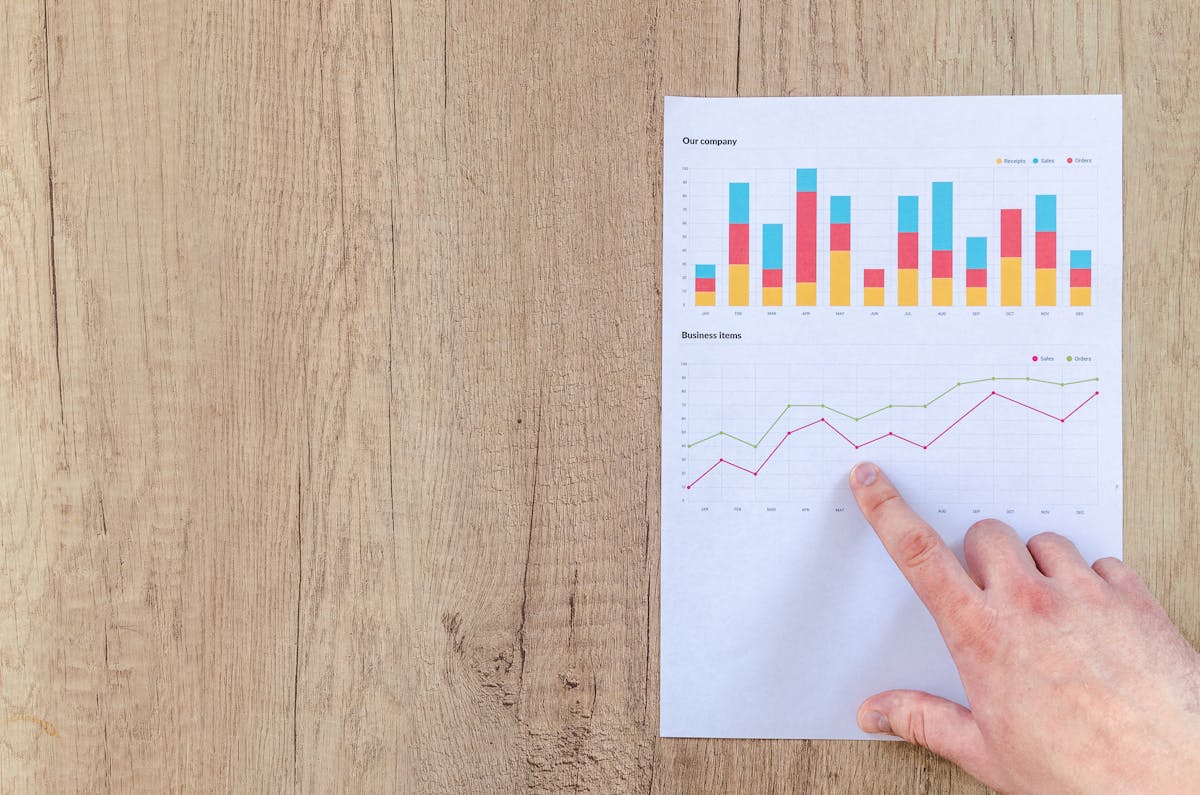
A noisy week, marked
Bars for completed checkouts hide the people who opened the basket three times. On paper we shade the returns so a briefing can see them without a filter panel.

Sketch before colour
Nino still starts in pencil. If a drop-off cannot be seen in graphite, colour will not save it. This is the stage we stop at when a file is too thin.

The key beside the picture
Every finished picture travels with a short key: what a mark means, which days are included, which personal details were stripped. Board packs fail when that key is missing.

Leave room around the subject
We keep margins wide on purpose, the way water needs space around a moving body. Crowded charts make a room argue about ink instead of about the pause on the language picker.